An attribution model is the rule or algorithm that decides how credit for a conversion is shared between the marketing touchpoints that preceded it, such as ad clicks and site visits. In GA4 and Google Ads the main choices in 2026 are data-driven attribution and last click, since Google removed first click, linear, time decay and position-based models in 2023.
Most people touch several ads and visits before they buy. Every analytics and advertising platform has to decide which of those touchpoints gets credit for the sale. That decision is the attribution model, and changing it changes which campaigns look profitable.
How it works
An attribution model looks at the touchpoints recorded before a conversion, within a lookback window, and assigns each a share of the credit. There are two broad types:
- Rule-based models apply a fixed rule. Last click gives all credit to the final touchpoint. Historic models such as first click, linear, time decay and position-based used other fixed splits.
- Data-driven models compare the paths of users who converted with those who did not, and estimate how much each touchpoint changed the likelihood of conversion. Google's data-driven attribution works this way, using the account's own data.
In 2023 Google removed first click, linear, time decay and position-based models from both Google Ads and GA4, citing low adoption, and made data-driven the default. Data-driven, last click and external attribution remained. Third-party and in-house tools still offer the other rules.
In GA4, attribution is set under Admin > Data display > Attribution settings:
| Setting | Options |
|---|---|
| Reporting attribution model | Data-driven or a last click model |
Lookback window, acquisition key events (first_visit, first_open) | 7 or 30 days (default 30) |
| Lookback window, all other key events | 30, 60 or 90 days (default 90) |
Why it matters in 2026
With fewer models to choose from, most teams now compare data-driven with last click, and the difference between them is what matters. Data-driven usually moves credit towards upper-funnel campaigns that appear early in paths; last click favours brand search and retargeting.
Attribution also depends on what the platform can see. Consent rates, cookie loss and cross-device journeys all remove touchpoints, which is why enhanced conversions and the Conversions API exist. And attribution only shares out credit: it cannot tell you whether an ad caused a sale. For that you need incrementality tests or marketing mix modelling.
How to check it
- In GA4, open Admin > Data display > Attribution settings and note the reporting model and both lookback windows. Changes apply to historical data in reports.
- In Google Ads, open each primary conversion action and check its attribution model and click-through conversion window.
- In GA4, use Advertising > Attribution > Model comparison (where available in your property) to see how credit moves between models by channel.
- Write the settings in your measurement plan so reports for clients or management state which model they use.
Common mistakes
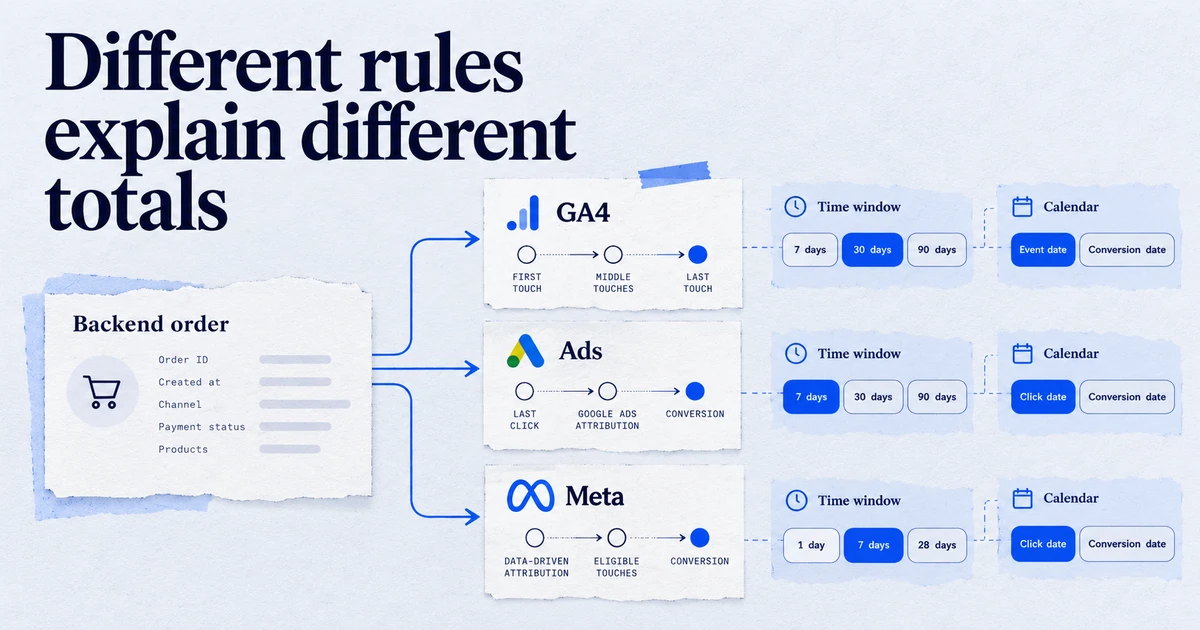
- Comparing platforms with different settings. A 90-day data-driven GA4 number next to a 30-day Google Ads number.
- Treating attribution as causation. A channel with high attributed revenue may be capturing demand that would have converted anyway.
- Forgetting the conversion date. Google Ads reports by click date; GA4 reports by event date.
- Changing the model mid-period without telling people who read the reports.
Related terms: Measurement Protocol, Consent Mode.
Frequently asked questions
What is the default attribution model in GA4 and Google Ads?
Data-driven attribution is the default in both. It uses the account's own conversion paths to estimate how much each touchpoint contributed. You can switch to a last click model if you prefer a simple rule.
Which attribution models did Google remove?
Google removed first click, linear, time decay and position-based models from Google Ads and GA4 in 2023. From June 2023 they could no longer be selected for new conversion actions, from September 2023 remaining Google Ads conversion actions were switched to data-driven, and Google said the models were no longer available as of November 2023.
Is attribution the same as incrementality?
No. Attribution distributes credit for conversions that were recorded, based on the touchpoints it can see. Incrementality asks whether the conversion would have happened without the ad at all, and needs an experiment with a control group to answer.
Why do GA4 and Google Ads show different conversion numbers?
They can use different attribution models, lookback windows, conversion counting and dates (click date versus conversion date). GA4 also credits non-Google channels, while Google Ads only reports on its own ads. Align the settings before comparing.
Sources
Dimitris builds Tracking Whisper and writes about tracking, analytics and data from the work the agent does every day: GTM containers, GA4 properties, ad platforms and the numbers in between.